Ahmed Saber Sakna
I build the bridge between ancient wisdom and modern science — using machine learning, remote sensing, and cultural heritage frameworks to secure water futures across the Arab world. From nuclear power infrastructure to the oases of the Western Desert, every step of my career has been shaped by a single question: what does responsible water stewardship actually look like?
ERU Teaching Assistant → El Dabaa Nuclear Site → IHE Delft → UNESCO Cairo
12+ countries, 5 ministries, €1M+ secured, conferences & field missions
380 innovators, national competition, 3 winning projects, 6-week bootcamp
Oases restoration & mangrove regeneration — Spain–Egypt Alliance 2025–2030
ML + remote sensing + CMIP6 ensemble — the Nile Delta through 2099
Heritage-based solutions, Arab MAB, case studies across 12 countries
University Heritage Forum — 7 thematic conservation strategies, 85 participants
Open to international development, consultancy & research collaborations
Environmental Consultant · Water Resource Specialist · Cairo, Egypt
In 2018, I graduated ranked 1st in my cohort from the Egyptian Russian University with a BSc in Construction Engineering and a GPA of 3.93/4.00. The path forward seemed clear: build things that matter, at the highest possible level.
But before the construction sites, there were four years in the classroom — not as a student, but as a Teaching Assistant. I designed curriculum for 120+ students annually across Engineering Hydrology, Sanitary Engineering, Water Resources Management, and Project Management. I organized three national workshops on sustainable water management for 200+ stakeholders. I introduced GIS tools into modules that had never used them. The classroom taught me how to translate complexity into clarity — a skill that has defined every role since.
"Technical precision without cultural and environmental grounding is not engineering. It is just construction."
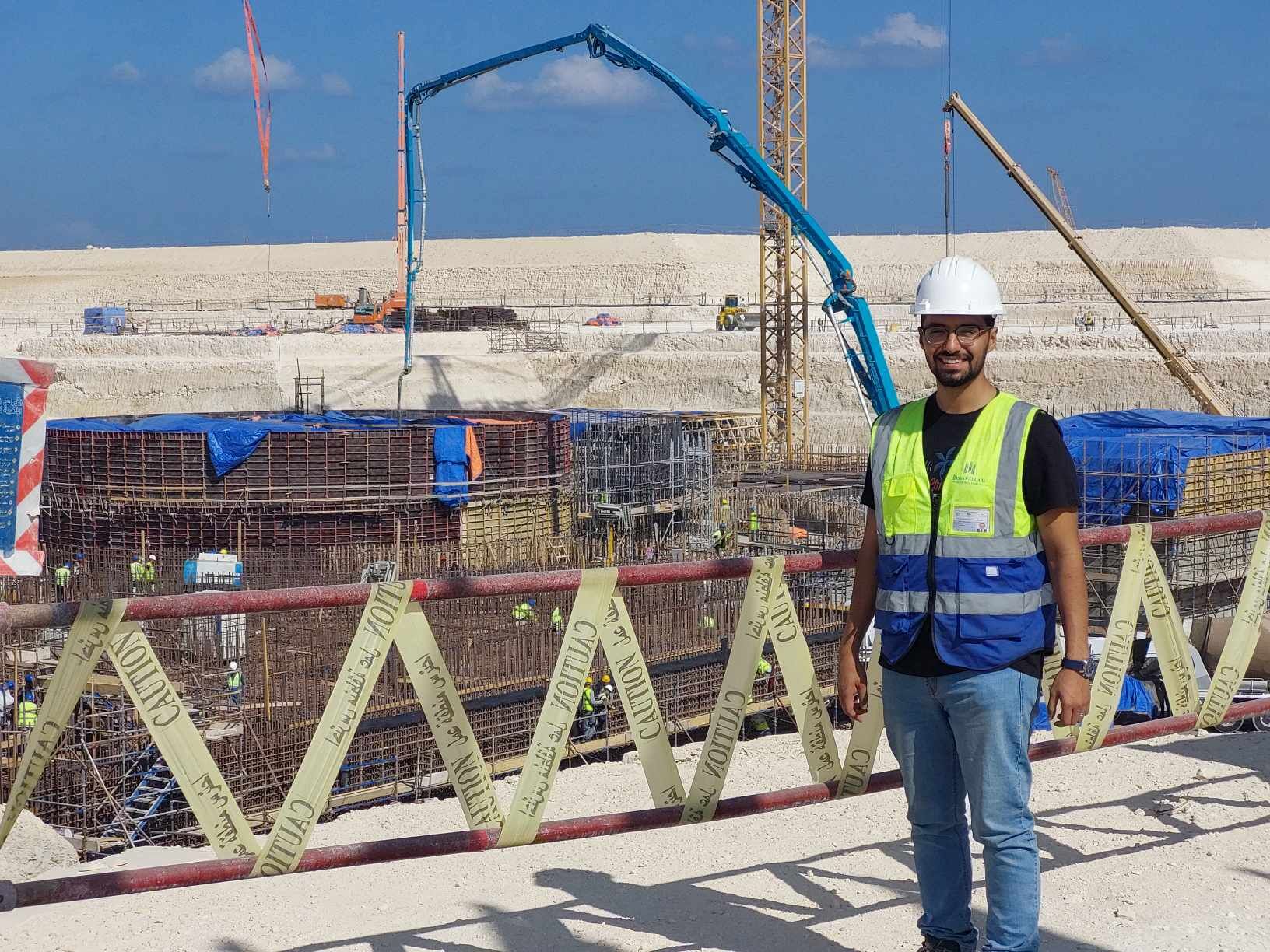
In 2022, I joined Hassan Allam Construction as a Project Engineer at the El Dabaa Nuclear Power Plant — one of Africa's largest active infrastructure programs on Egypt's Mediterranean coast. I managed critical water supply and firefighting infrastructure for 174+ buildings, coordinated 5 multinational stakeholders, and achieved a 15% reduction in cost overruns. But the Mediterranean basin asked me questions that the construction site could not answer.
Construction Engineering. Teaching Assistant 2018–2022 for 120+ students annually across 4 courses. 3 national workshops organized. First publications in self-healing bacterial concrete.
Critical water infrastructure for Africa's largest nuclear project. 15% reduction in cost overruns. 5 multinational stakeholders coordinated. The Mediterranean basin raises the question that redirects a career.
Teaching Assistant 2018–2022 for 120+ students annually across Engineering Hydrology, Sanitary Engineering, Water Resources Management, and Project Management — achieving a 10% improvement in exam pass rates. Developed new curriculum integrating applied GIS tools and real-world case studies. Organized 3 national workshops for 200+ stakeholders on sustainable water management and climate resilience. Research publications in self-healing bacterial concrete introduced the idea of systems that regenerate rather than just resist.
Developed predictive ML models using WaPOR v2 satellite AETI data and AgERA5 climate reanalysis, trained against a 23-model CMIP6 ensemble. Produced crop-specific water consumption projections for six major crops under SSP2-4.5 and SSP5-8.5 through 2099. Nine ML algorithm types evaluated; Random Forest, SVR, and Ridge selected as best performers. Findings submitted for peer-reviewed publication (2026). Interdisciplinary Grenoble project: co-developed multi-stakeholder reservoir operation models with Grenoble Water Reservoir Authority.
My time at IHE Delft was not just about the thesis. It was about becoming part of a global water community — and contributing to it.
Elected Vice Leader of the IHE Delft Student Board. Organized institute-wide events, debates, and interdisciplinary exchange programmes for the global student body.
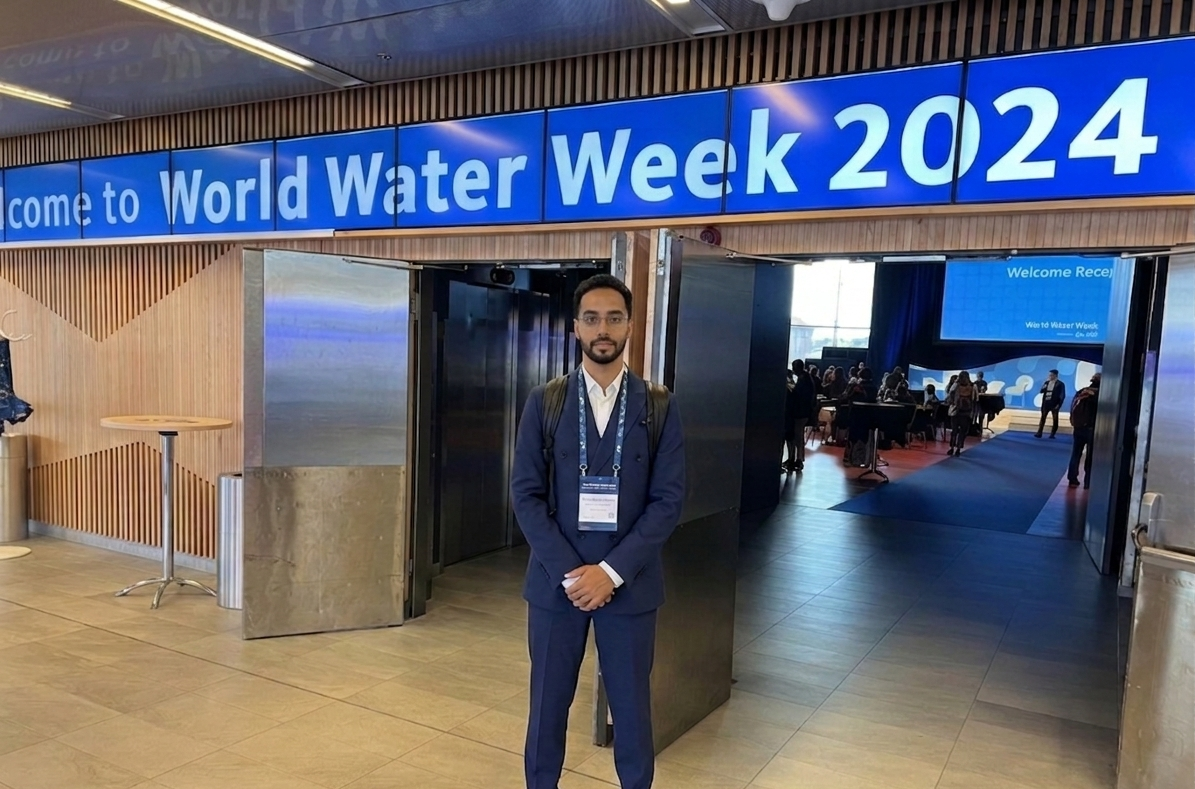
Selected to represent IHE Delft at World Water Week 2024 in Stockholm — the world's leading annual water conference. Participated in sessions on climate adaptation, food-water nexus, and the future of water education.
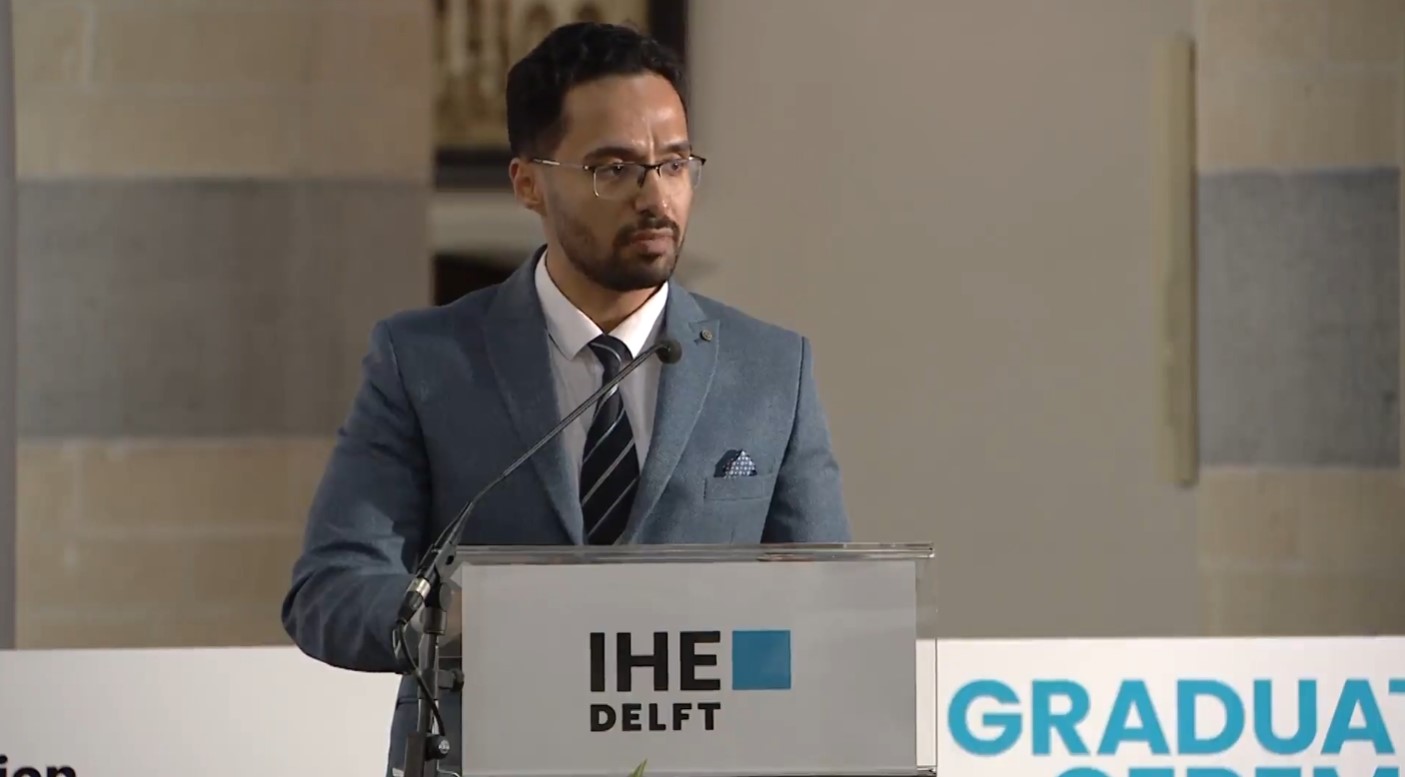
Delivered the graduation speech on behalf of the graduating cohort, focusing on the right of every child to food and water security. A message connecting scientific training to universal human obligation.
▶ Watch the Speech →Research internship at AgroParisTech Montpellier, France. Focused on agricultural water use optimization and the intersection of agronomy with hydrological modeling.
Co-developed reservoir operation models integrating ecological flow targets, irrigation, hydropower, and recreational objectives. Facilitated structured stakeholder interviews and co-design workshops to strengthen social legitimacy of management plans.
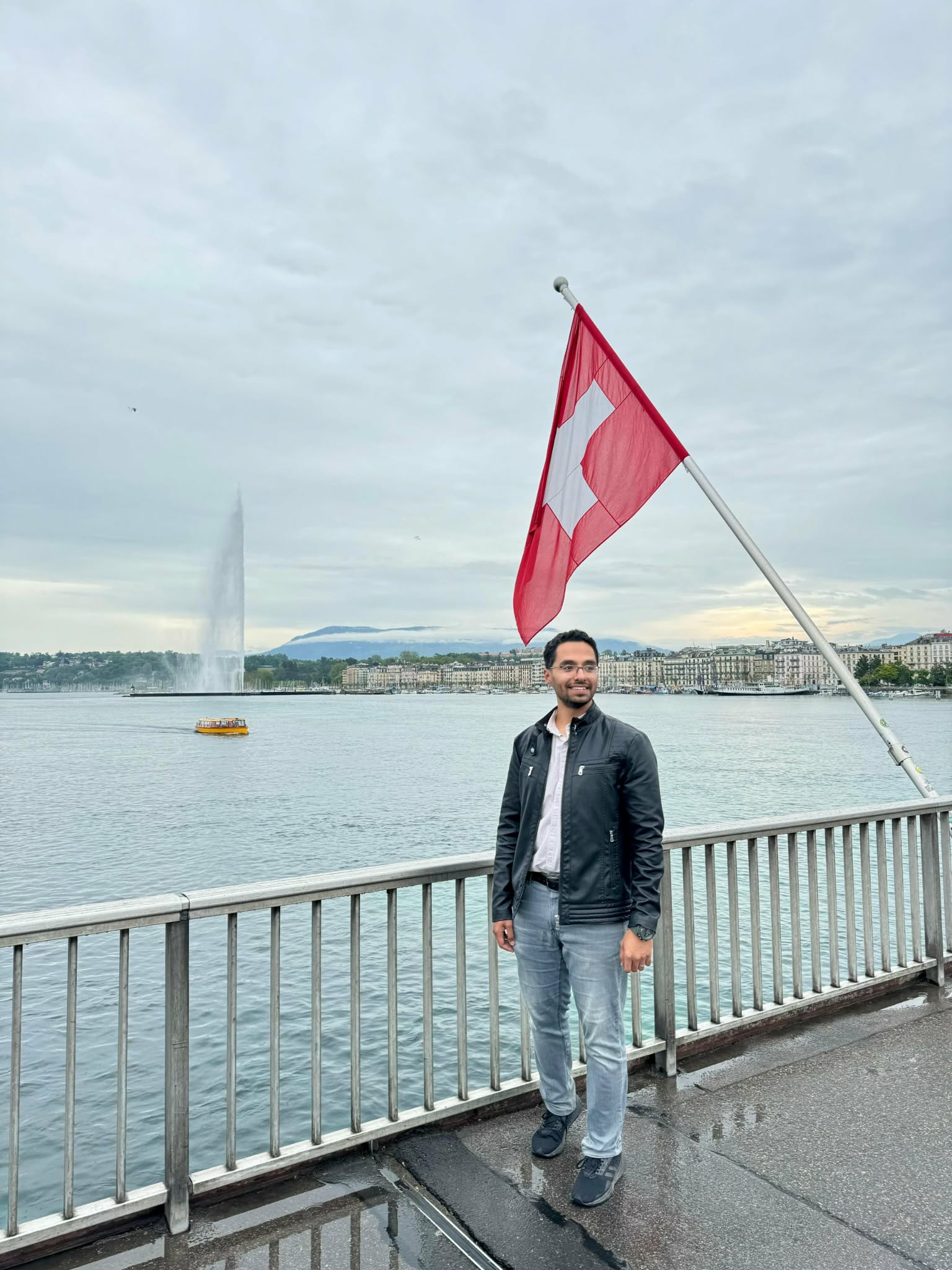
Participated in discussions at WHO75 (75th Anniversary of the World Health Organization) and debates at the WMO Headquarters in Geneva — engaging with global policy on the intersection of water, health, and climate at the highest institutional level.
Navigate to any section
The journey from IHE Delft to UNESCO Cairo began at Cairo Water Week 2024, where I met Director Nuria Sanz and joined immediately to develop what would become the WEFE+C Competition. The Arab world's ancient water and land management wisdom is not nostalgic heritage — it is actionable, scientifically validated climate adaptation technology.
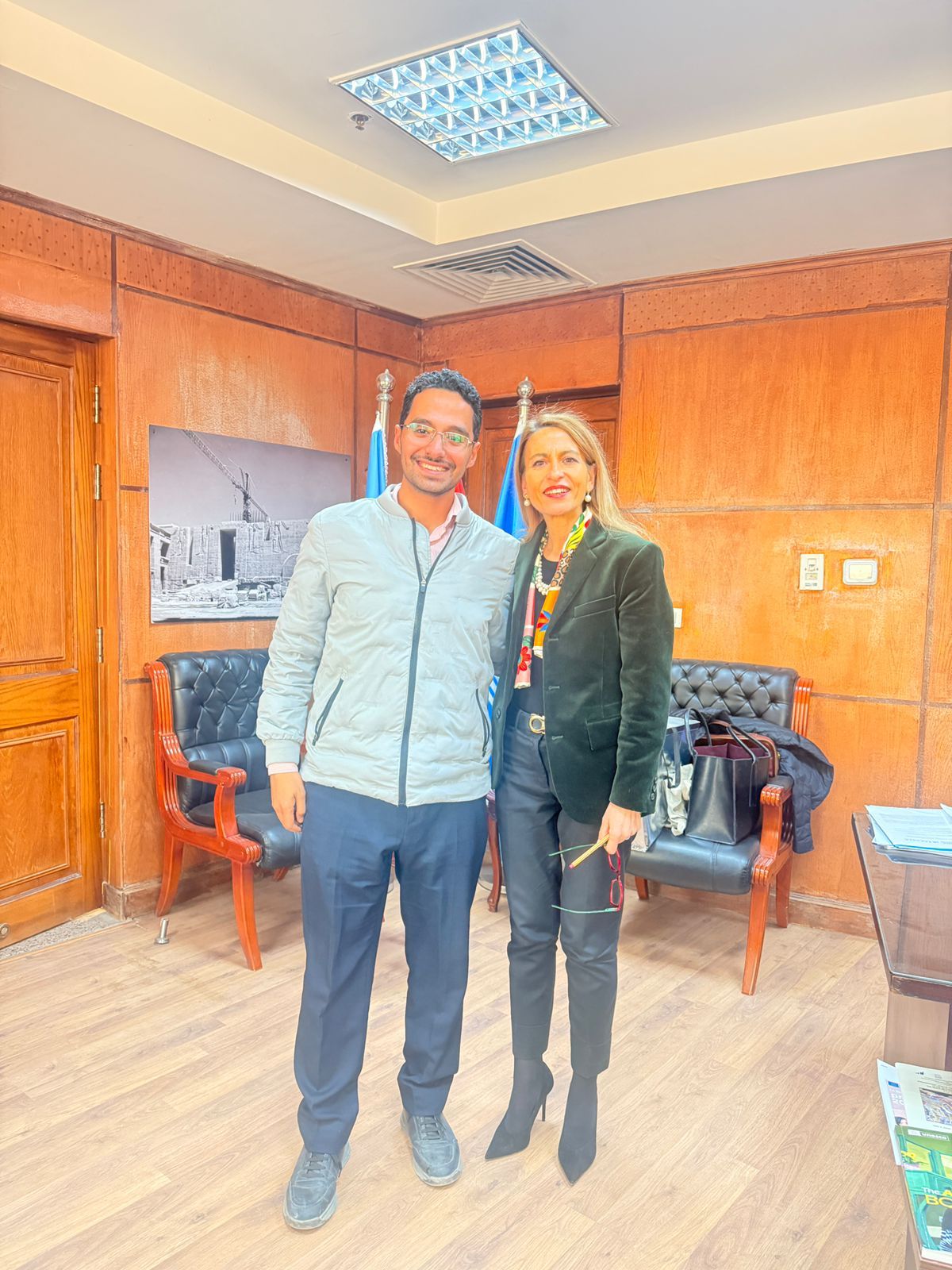
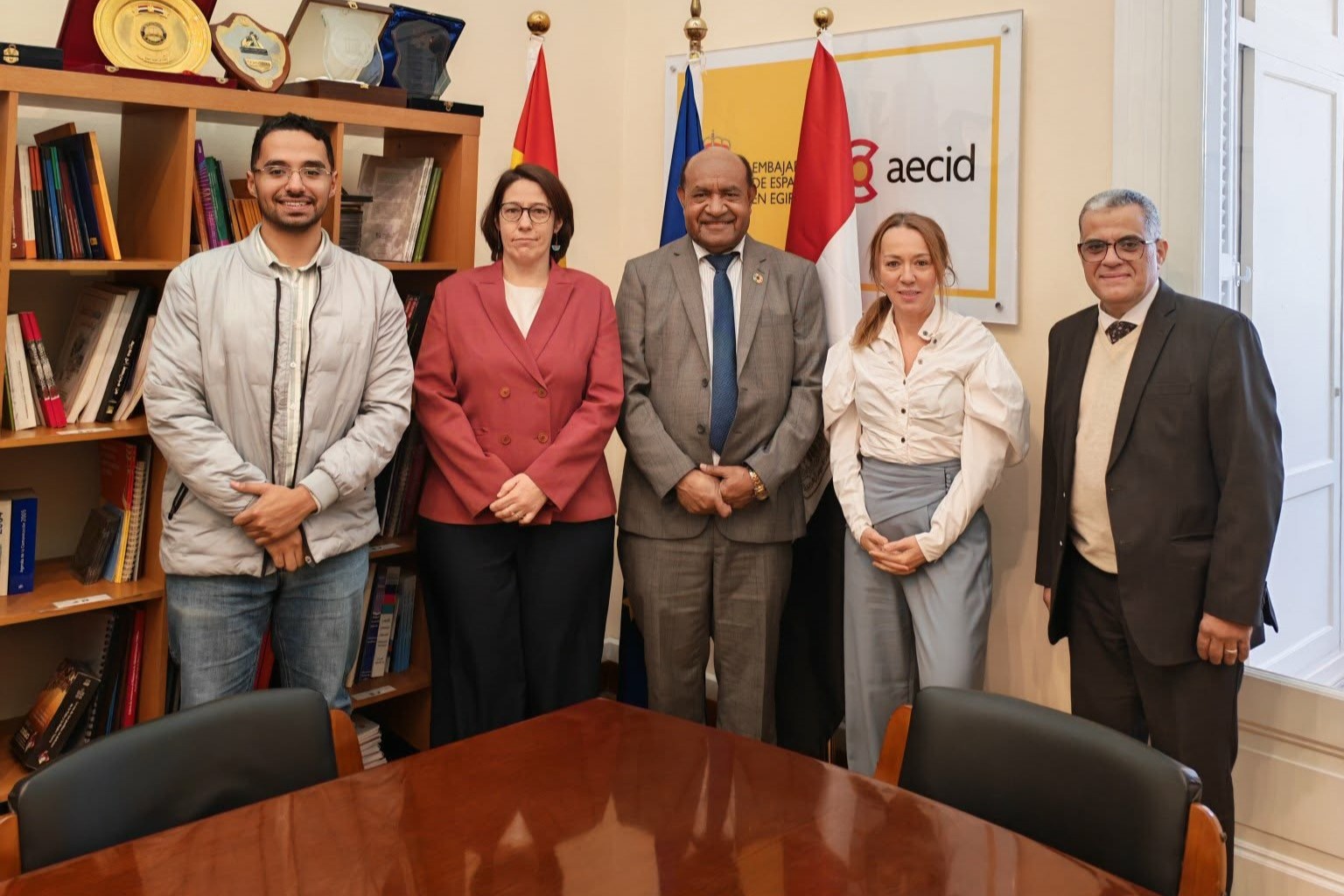
€1M in AECID funding secured for oasis restoration and mangrove regeneration as part of the Spain–Egypt Alliance.
Designed and ran the WEFE+C Trail in Motion, engaging 380+ innovators from universities across Egypt.
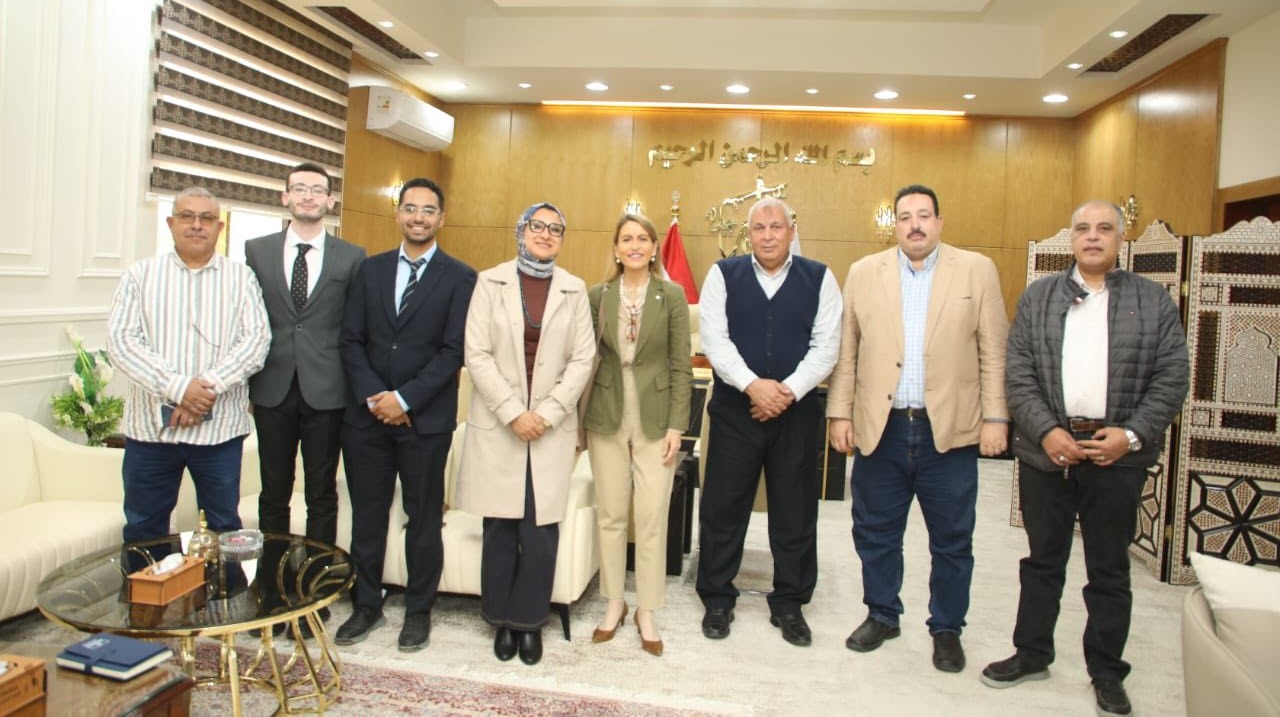
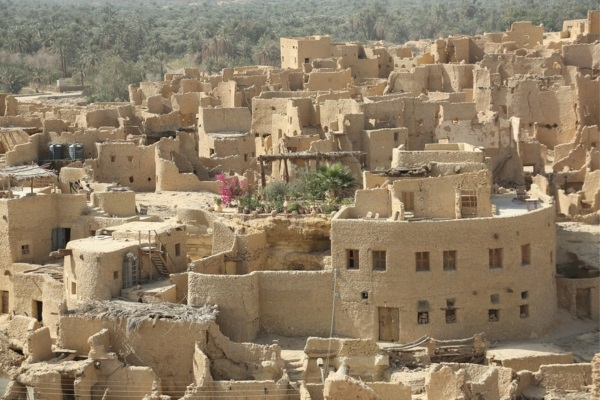
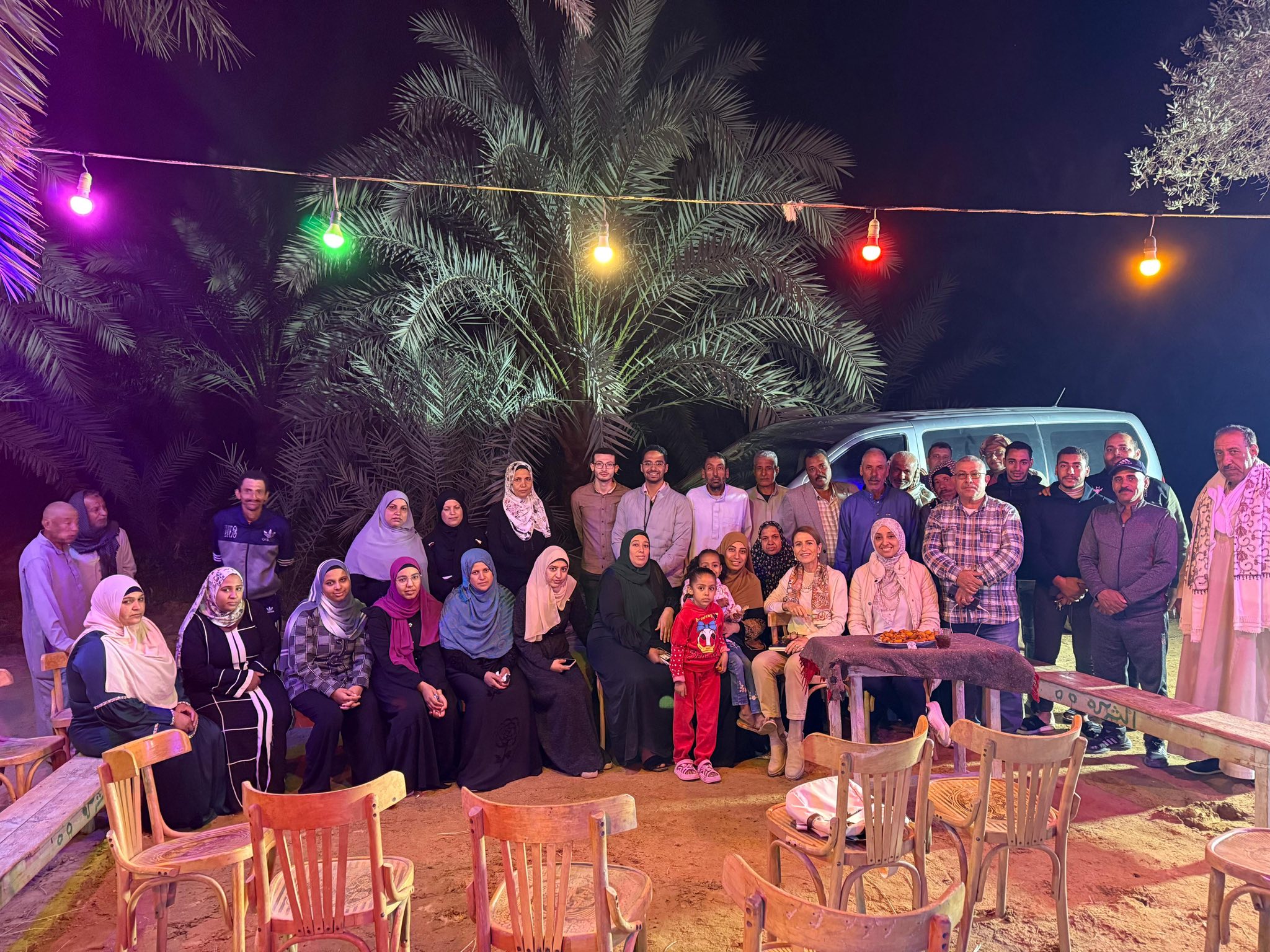
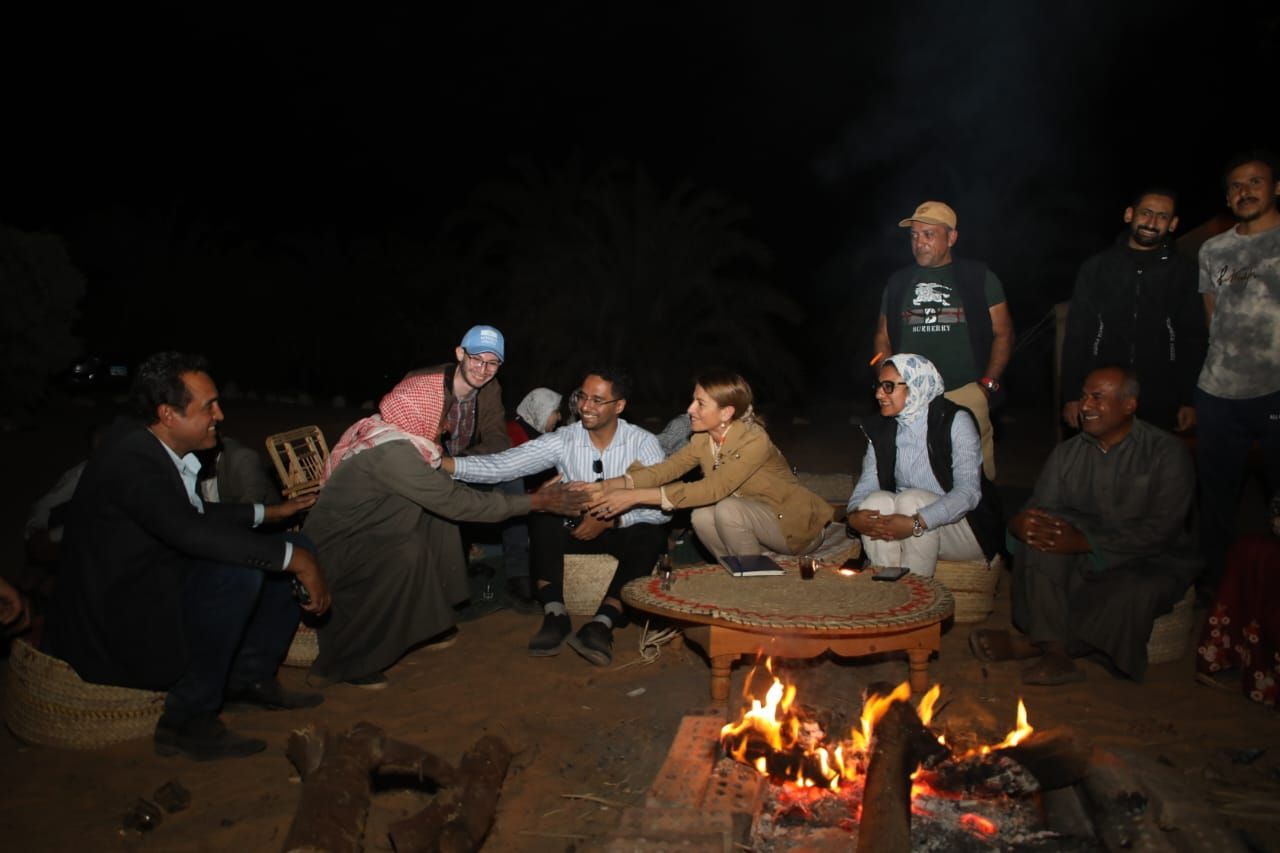
Field missions to Siwa, Fayoum, New Valley, and Wadi El Gemal — bridging Traditional Ecological Knowledge with modern hydrology.
GIS analysis for Historic Cairo's Conservation Plan. 12-country Expert Group on Groundwater in Drylands.
From satellite technology conferences to expert group meetings on ancient oases — a year of moving between science, policy, and community.
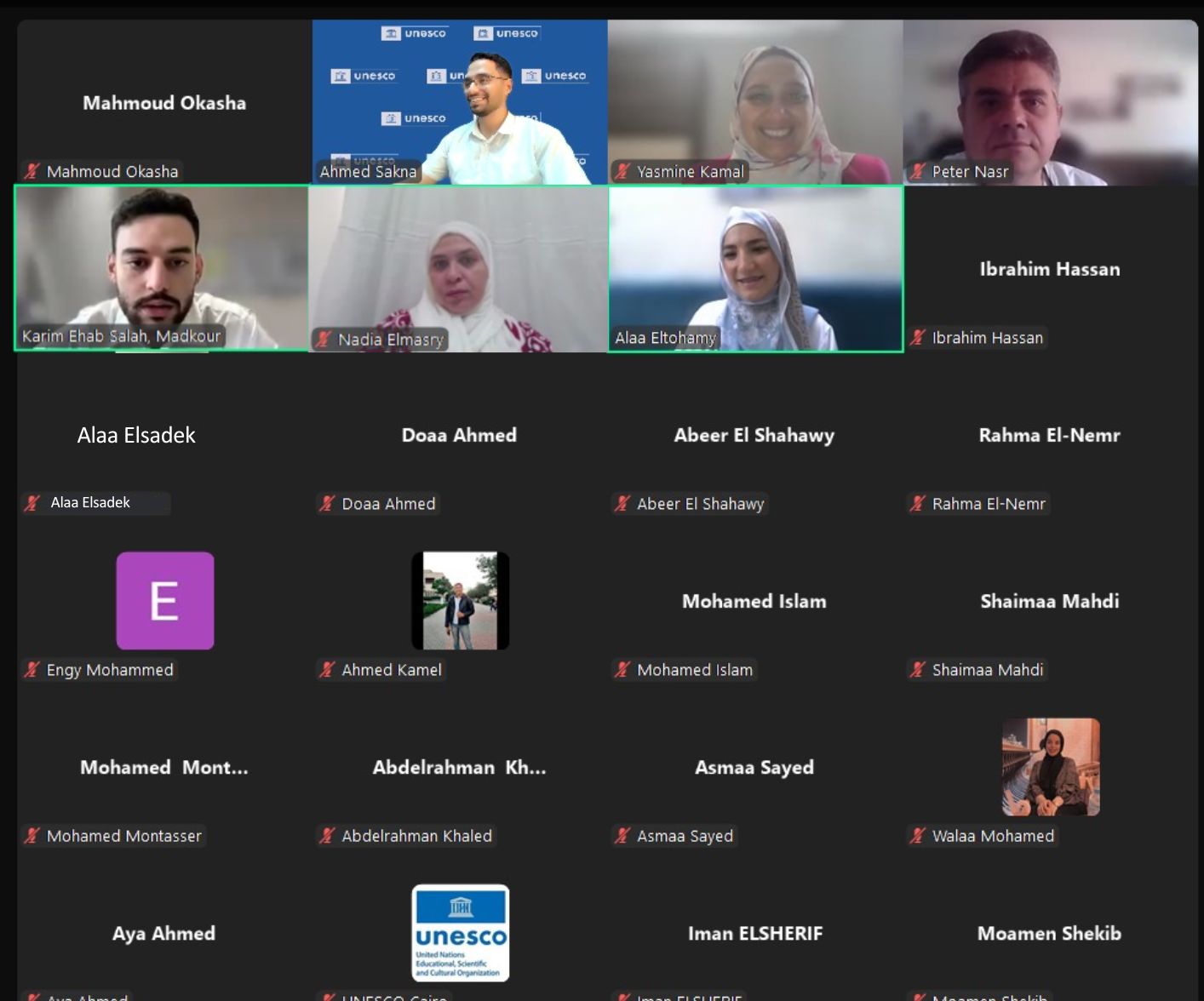
Met Director Nuria Sanz at CWW 2024. Joined UNESCO immediately afterward to develop the WEFE+C Trail in Motion Competition. Also represented UNESCO in joint sessions with FAO and Wageningen University & Research, exploring how WaPOR data tools can make agricultural water management more efficient. Moderated one of FAO's WaPOR sessions.
View on LinkedIn →Represented UNESCO at the EgSA NewSpace Africa Conference. Explored cutting-edge satellite technology, cloud-based analytics, and how space-derived data is reshaping agriculture and water management across Africa. The ability to monitor water resources with satellite precision at the scale of individual farms represents a paradigm shift in how we approach food security.
View on LinkedIn →Represented the UNESCO Cairo Regional Office at the WEFE Nexus in Egypt and MENA Region Conference organized by SureNexus and Participatory Development Solutions. Spoke on the panel on Governance and Integrated Policy Planning — addressing how policy fragmentation across water, energy, food, and ecosystem sectors undermines climate resilience.
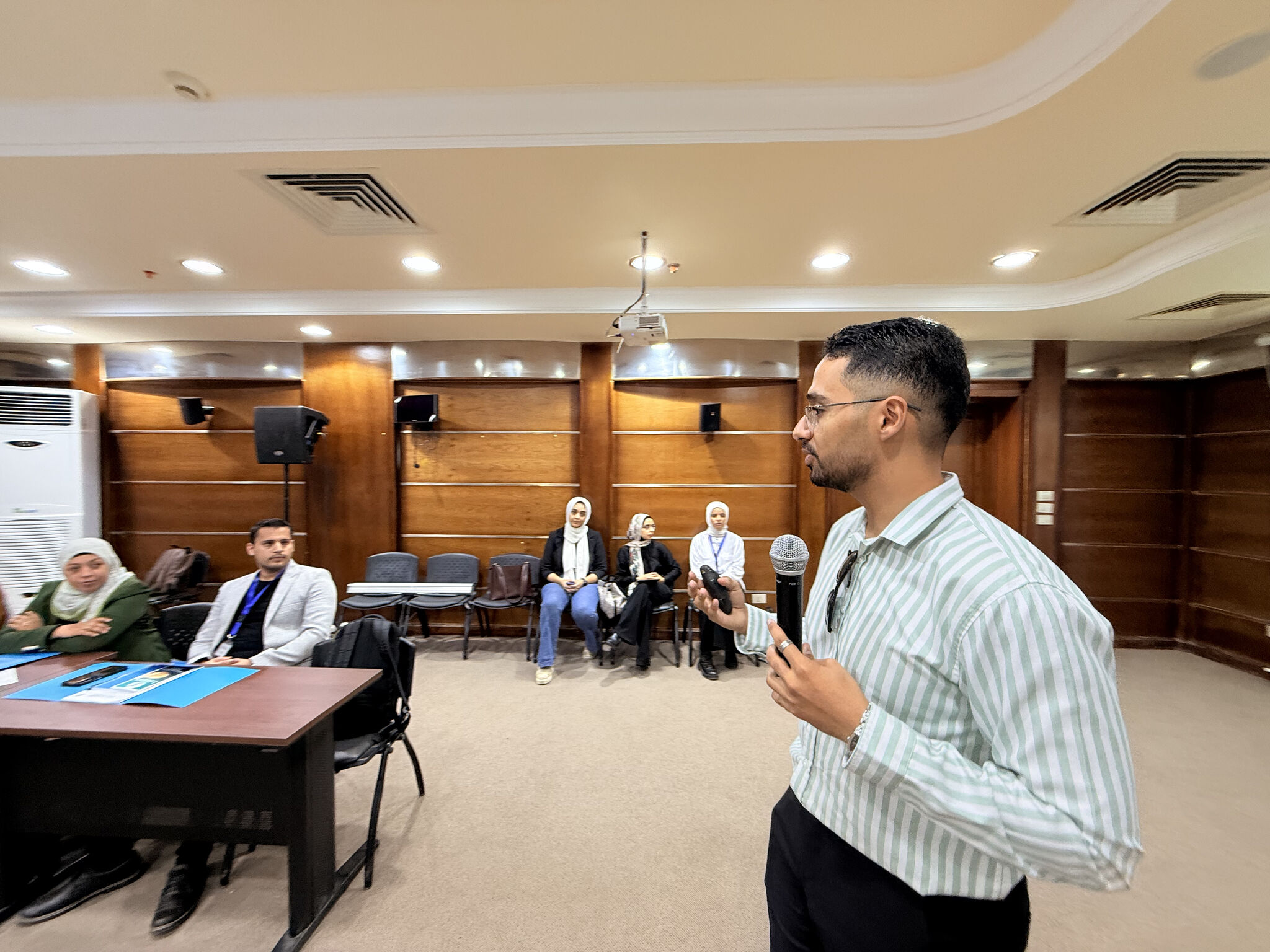
View on LinkedIn →Delivered a series of public seminars introducing the WEFE+C framework — Water, Energy, Food, Ecosystems, and Culture — to engineering, agriculture, and science faculties nationwide. Introduced Culture as the fifth, mandatory pillar and launched the partnership with MADKOUR Group to bridge innovations to real-world industrial scale.
View on LinkedIn →Hosted and led the 12-country Expert Group Meeting on Managing Groundwater and Dependent Ecosystems in Drylands at UNESCO Cairo. A paradigm-shifting dialogue: oases reframed not as fragile problems but as sophisticated living models of resilience. As Dr. Pietro Laureano stated: "The model is the oasis. This is why we have to preserve oasis, because it's a model for the future." Dr. Bisher Imam grounded the discussions: "If we are not talking about our failure… we are not going to learn from it."
View on LinkedIn →Coordinated a landmark meeting bringing together Biosphere Reserve managers, Geopark experts, and conservation scientists from across the Arab region. Director Nuria Sanz set the tone: "We are not at the center of problems, but at the center of solutions." The meeting explored how Biosphere Reserves function as resilient models for climate action, and how Geoparks should be reframed as "natural infrastructure — an investment-worthy climate asset."
View on LinkedIn →Represented UNESCO at the launch of Egypt's National Workshop for the Convergence Initiative. H.E. Prof. Khaled Abdel-Ghaffar and UN Resident Coordinator Elena Panova spoke with a unified voice on tackling the intersection of food systems, climate change, and health. UNESCO contributed expertise on the critical link between water security and food systems.
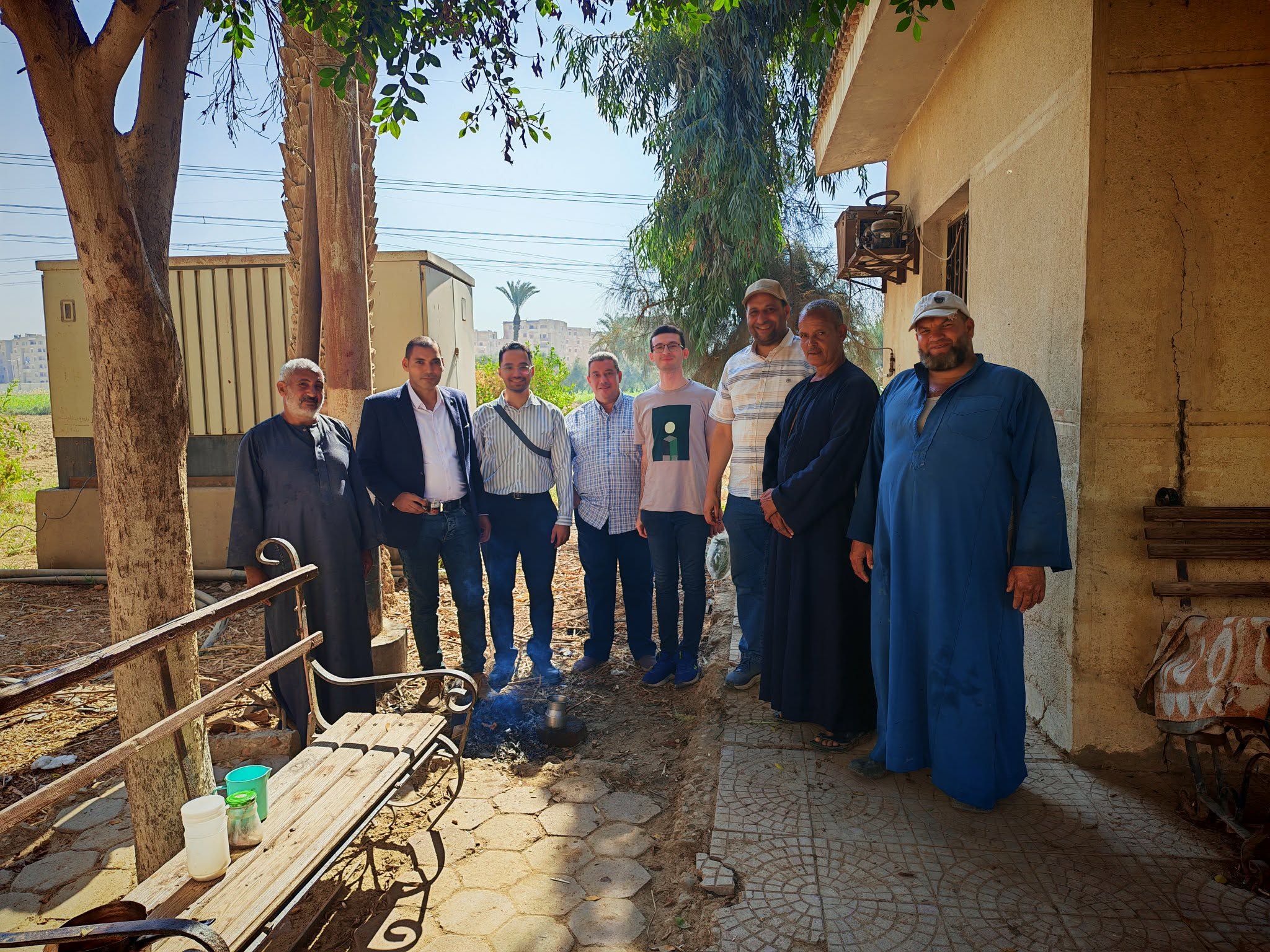
View on LinkedIn →Led two landmark UNESCO field missions. In Fayoum: witnessed the seamless integration of heritage farming and cutting-edge research — from 4,000-year-old basin-irrigated fig orchards to nano-selenium supplements on heat-stressed chicks. In New Valley: four days that challenged every assumption about heritage and development. Hag Saad, 85 years old, described water that once flowed at 50 meters now requiring drilling to 750 — while adapting through "knowledge by sight" accumulated over a lifetime.
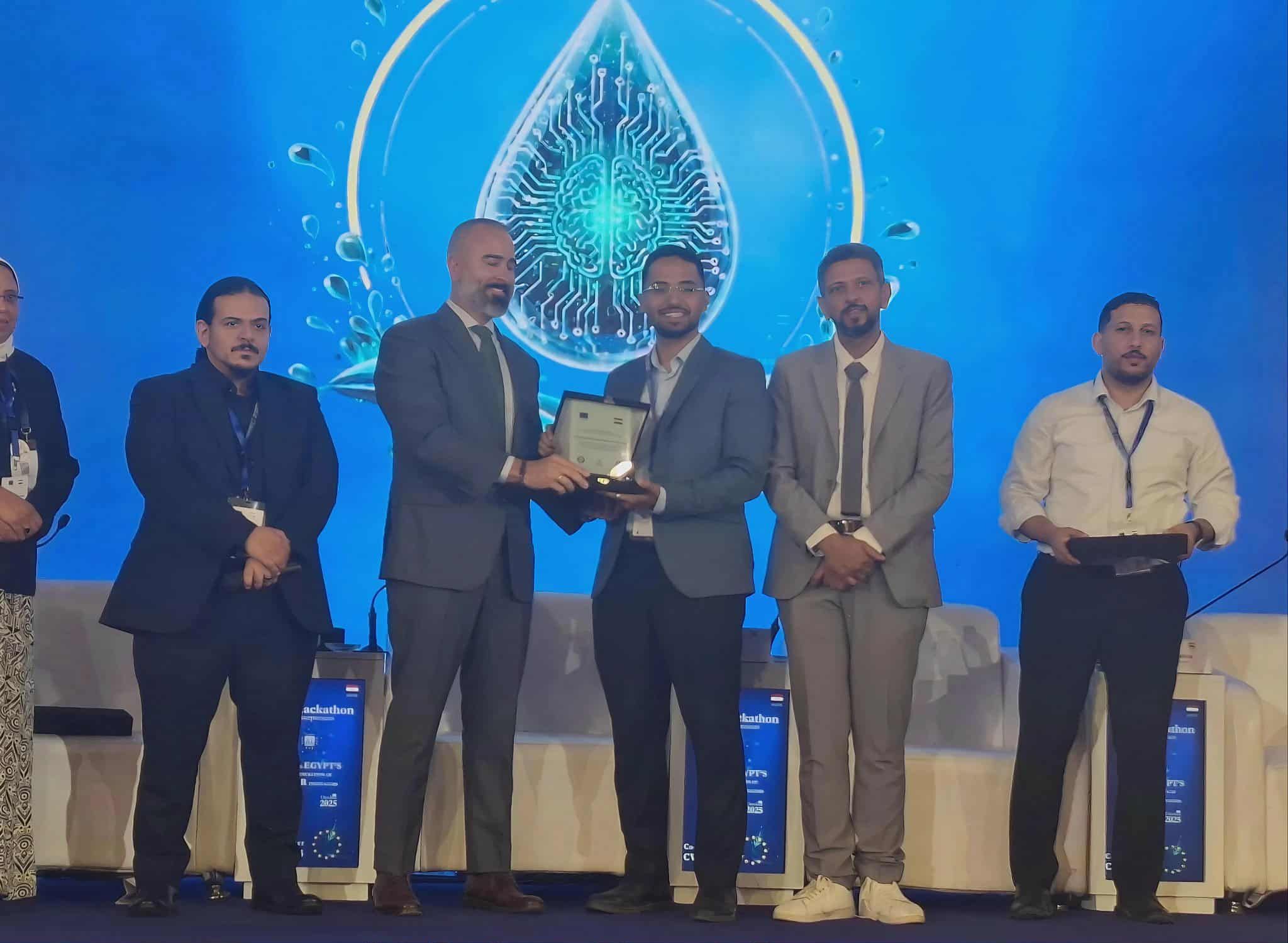
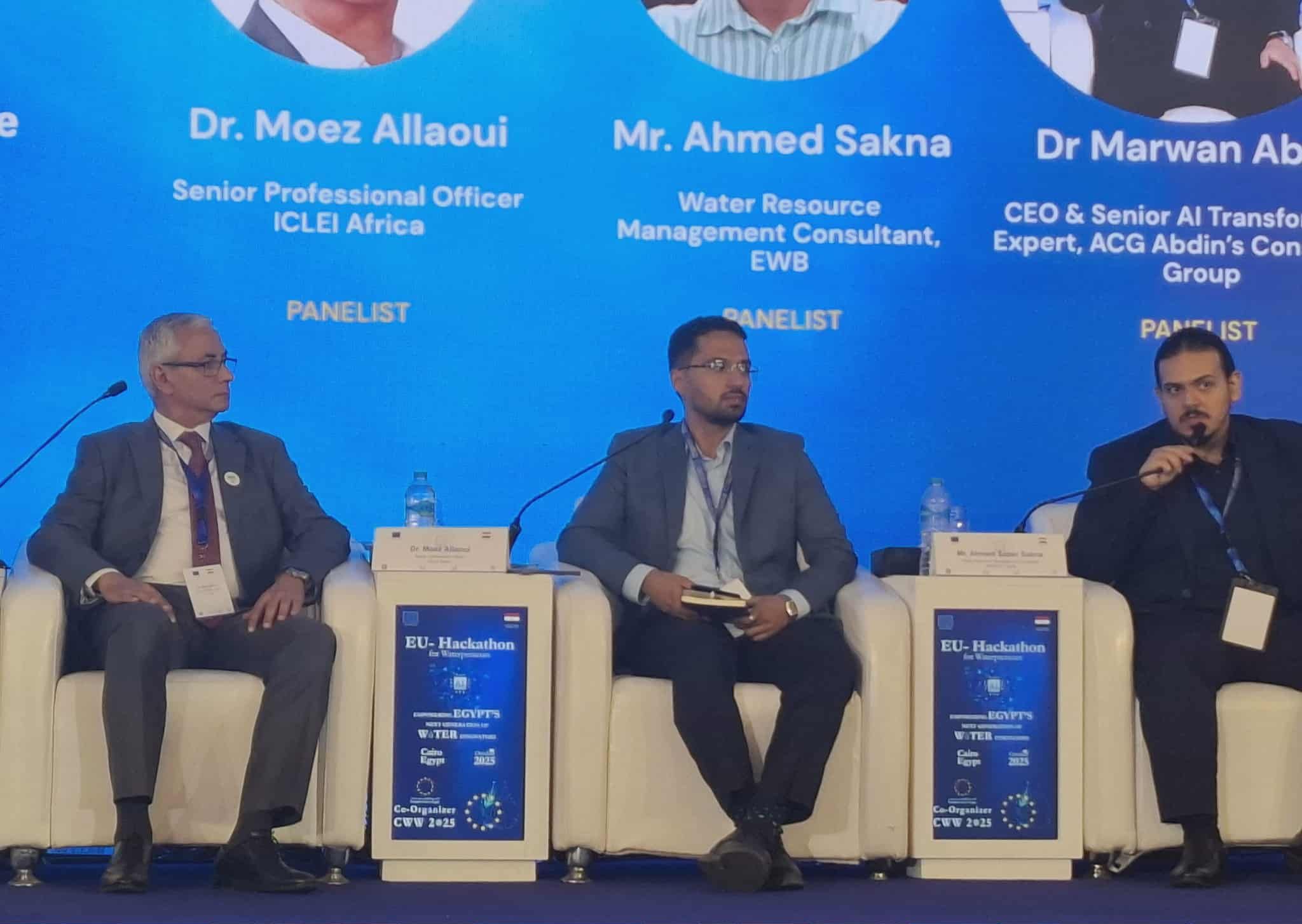
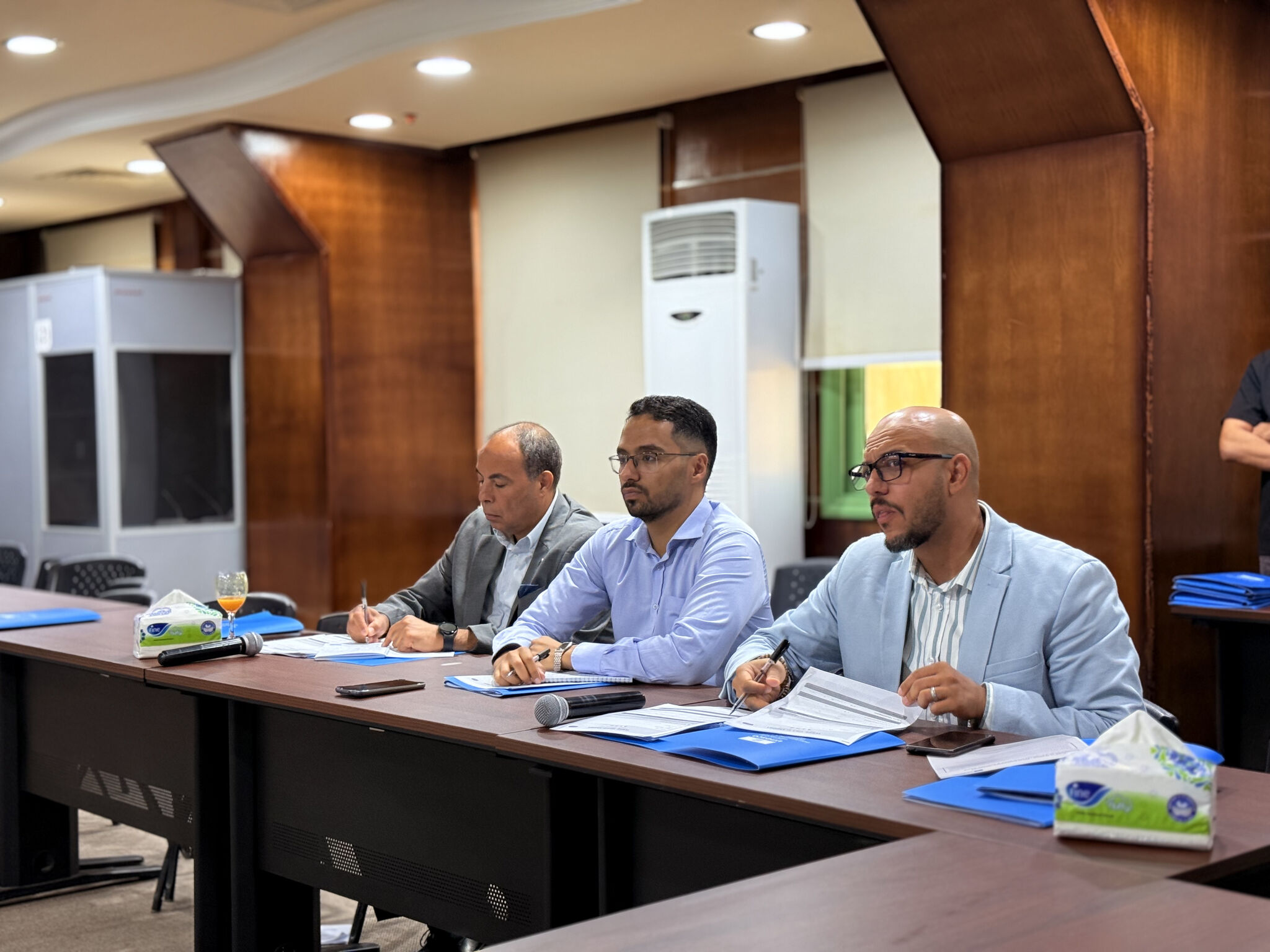
Fayoum Mission → New Valley Mission →Led and coordinated the two-day final evaluation event (Aug 28–29) at UNESCO Cairo. 19 finalist teams presented under the "Dossier-First" methodology: 15 minutes presentation + rigorous cross-examination. Selected the three winning projects that entered the 6-week mentorship bootcamp. Also served as Judge at the AI Hackathon for Waterpreneurs, organized with the ACG and the European Commission in Egypt, alongside Dr. Ayman Ayad.
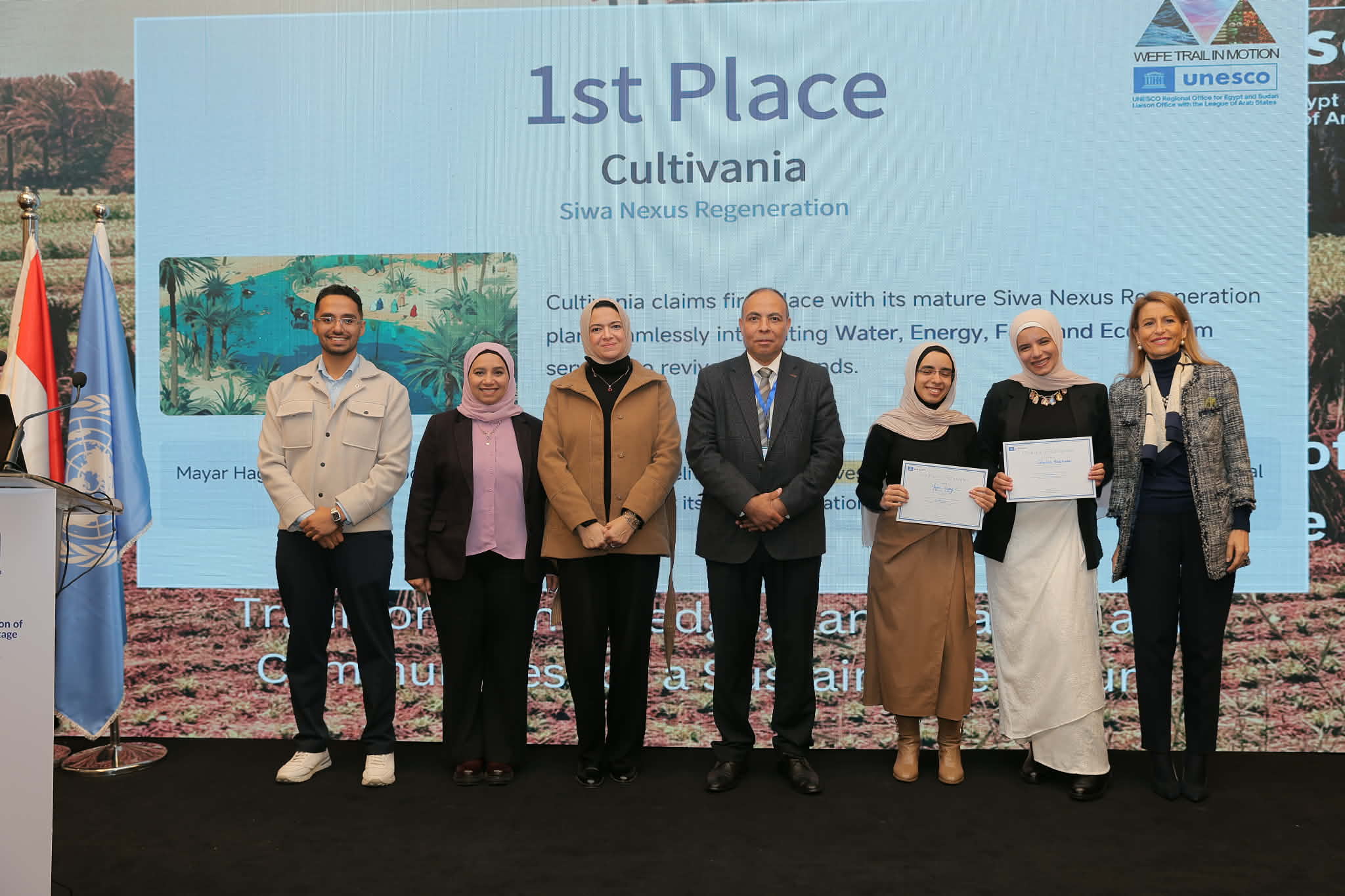
View on LinkedIn →Represented UNESCO at Cairo Water Week 2025, celebrating 50 years of the International Hydrological Programme. Showcased WEFE+C winning projects — Cultivania (Siwa), Loopet (Fayoum), and Smart Hydroponics (Kharga) — to international policymakers and donors. The Cultivania team was in active pilot development phase ahead of presenting to international investors.
Navigate to any section
I designed and ran this national competition to prove a belief: Egypt's oases are not problems waiting for outside solutions — they are living laboratories where the pressure of the WEFE Nexus is most acute and where communities already hold the most relevant knowledge.
The WEFE Trail in Motion added a fifth, mandatory pillar to the standard Water-Energy-Food-Ecosystem framework:
National Call: Open call through Deans' offices of Engineering, Agriculture, and Science faculties nationally. 13k+ impressions, 1000+ reactions.
Capacity Building: "WEFE+C In-Depth" webinar (June 12, 2025) — 3.5 hours of live training. 250+ participants.
Technical Screening: 140 formal applications reviewed. Multi-stage funnel reduced field to 19 finalists. Scoring: Technical Innovation (30%), Scalability (25%), Economic Viability (20%), Ecosystem & Social Impact (15%), Pitch Clarity (10%) + Cultural Bonus (+10pts).
Final Evaluation: Two-day event at UNESCO Cairo (Aug 28–29, 2025). "Dossier-First" methodology. Each team: 15 minutes + rigorous cross-examination.
Mentorship Bootcamp: Winners entered a 6-week intensive programme transforming concepts into fundable Project Documents.
Decentralized solar-powered Reverse Osmosis units treat brackish agricultural drainage water. Treated water irrigates salt-tolerant heritage crops and supports aquaculture in the Gambi Depression. Co-designed with local farmers. Currently in pilot development phase ahead of Cairo Water Week 2026.
A circular bio-economy model targeting Lake Qarun's ecological crisis. AI-optimized bioconversion process transforms massive poultry industry runoff into high-quality aquaculture feed — processing units powered by self-cleaning solar panels.
Solar-powered closed-loop hydroponics achieving 90% water savings. IoT sensors and a mobile app democratize high-efficiency farming, making it accessible for low-income households and youth entrepreneurs.
In September 2025, King Felipe VI and President El-Sisi signed the Spain–Egypt Alliance for Sustainable Development (2025–2030). Both projects below are its direct operational expression, co-developed by Ahmed Sakna as Project Specialist at UNESCO Cairo. Together they demonstrate a single thesis: conservation pays for itself when heritage, science, and community are treated as a unified system.
The Situation: Our Forensic Agrarian Review documented a "Phenological Shift" — climate change is physically altering the seasonal cycles and harvest dates of staple crops. Fossil aquifers are depleting at rates 3–5x faster than recharge. The ancestral "Knowledge by Sight" — intricate unwritten methods of managing scarce water — is dying with the elder generation.
2–3 traditional wells rehabilitated, 2 sand dams + recharge trench. 3ha of gravity-fed drip irrigation — eliminating diesel pumps.
Ancient "Fallow Irrigation" revived alongside intercropping of date palms with legumes, moringa, and henna. Bio-polymers bridging 4,000-year-old technique with 21st-century materials science.
8ha of salt-tolerant heritage crops, 150 agroforestry windbreak trees, 2 wetland strips for natural filtration and ecosystem recovery.
Historic 1960s Administrative Complex restored as School of Traditional Crafts. Local youth trained as heritage geo-tourism guides.
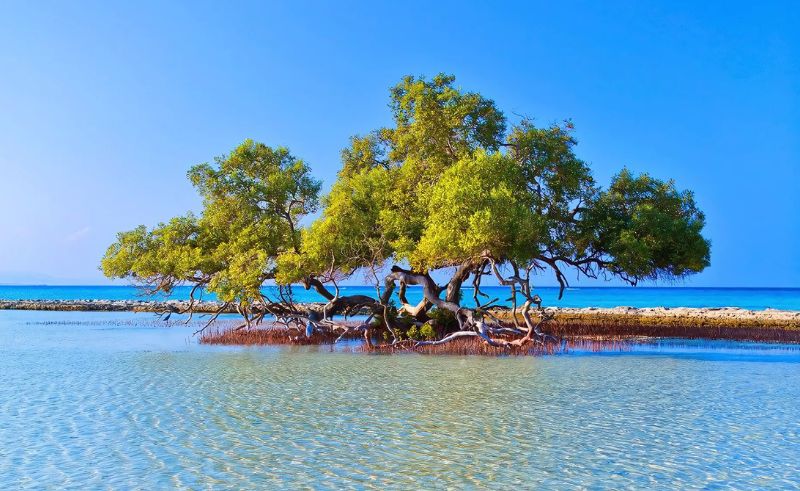
The Situation: A devastating 30% decline in Red Sea mangrove cover, driven by rapid urbanization, unregulated camel overgrazing, and climate change. Past restoration initiatives failed because they relied on guesswork — ignoring local hydrology and excluding the Ababda Bedouin who hold 20 years of unpublished ecological knowledge.
Restore 20km of coastline with 20,000 mangrove trees. Planting zones dictated by 40 years of Egyptian Space Agency satellite baselines (1985–2025).
Camel-proof fencing around every planting zone. Restore degraded tidal channels to reinstate correct hydrological flow — the critical condition past projects ignored.
Formal vocational training for 60 local youth and women in sustainable fisheries, mangrove nursery operations, and eco-tourism guiding.
Continuous NDVI Vegetation Index analysis via EgSA satellite imagery. Project culminates in a peer-reviewed Mangrove Restoration Model.
My MSc thesis produced a counterintuitive finding that challenges standard assumptions about how climate warming affects crop water demand — and revealed that national land-use policy, not climate change itself, is the dominant driver of Egypt's future agricultural water crisis.
Data: WaPOR v2 (30m resolution AETI, 2009–2023), AgERA5 climate reanalysis, ensemble of 23 CMIP6 General Circulation Models. Six major irrigated crops. Projections through 2099 under SSP2-4.5 and SSP5-8.5.
Method: Nine ML algorithm types evaluated per crop. Best performers: Random Forest (Orchards R²=0.863, Wheat R²=0.684), SVR (Rice R²=0.832, Grapes R²=0.677, Potato R²=0.766), Ridge Regression (Clover R²=0.770).
Counter-intuitive finding 1: Winter crops (wheat, clover) show INCREASING water demand (+5.3–6.6% by 2099). Warmer winters increase evaporative demand during the cool growing season.
Counter-intuitive finding 2: Summer crops (rice, grapes) show DECREASING water demand (−4.7% to −6.3%). Driven by projected changes in humidity and radiation balance during peak summer months.
Policy finding: Agricultural expansion will drive a +13.5% total CWR increase by 2050 vs. +3.6% from climate change alone. National land-use policy is the critical lever.
Egypt faces an existing annual water deficit of 13.5 billion m³. The crops most planned for national expansion — wheat and orchards — are precisely those projected to need the most water under climate change. Policy is the lever that matters most.
Sakna, A., Mul, M., Tran, B., & Seyoum, S. "Assessing the Impact of Climate Change on Water Consumption Using Remote Sensing Data and Machine Learning: A Case Study of the Nile Delta, Egypt." Submitted for peer review, 2026.
→ Code & data: github.com/sadow999/IHE-ThesisAbdelal, Q., Al-Kilani, M.R., Al-Bakri, J., Keblouti, M., & Sakna, A. "Reduced Frequency of Soil Moisture Measurements for Cost-effective Irrigation Management in Arid Regions." Journal of Agrometeorology, 28(1), 100–103.
doi:10.54386/jam.v28i1.3254 →Galishnikova, V.V., Elroba, S.M., Dayoub, N., & Sakna, A. "Use of natural compounds as nutrition for bacteria in self-healing mortar." Structural Mechanics of Engineering Constructions and Buildings, 18(1), 54–63.
doi:10.22363/1815-5235-2022-18-1-54-63 →Galishnikova, V.V., Elroba, S.M., Mahadi, M.I.A., Dayoub, N., Sakna, A., & Fakhratov, M.A. "Bacteria-Based concrete crack healing: A review." AIP Conference Proceedings, 2559, 050010.
doi:10.1063/5.0099031 →Galishnikova, V.V., Elroba, S.H., Nassar, M., & Sakna, A. "Self-healing bacterial mortar with calcium lactate and improved properties." Magazine of Civil Engineering, 105(5), Article No. 10503.
doi:10.34910/MCE.105.3 →The publications and policy work at UNESCO Cairo are grounded in a single paradigm shift: oases are not merely natural systems requiring technical interventions. They are heritage-based solutions — socio-ecological systems where cultural practices, traditional knowledge, and social structures are as integral to ecological function as hydrology itself.
Linguistic diversity in oasis communities directly correlates with agrobiodiversity. The Siwi Amazigh language contains precise terminology for traditional cultivation techniques and water management practices that have maintained date palm genetic diversity for centuries. When the language erodes, the knowledge erodes — and the ecosystem erodes with it. The loss of traditional knowledge is as direct a threat to oasis sustainability as aquifer depletion.
This framework was developed through three field missions: to Fayoum University's Faculty of Agriculture, to Siwa Oasis, and to New Valley Governorate — then validated through the 12-country Expert Group Meeting on Managing Groundwater and Dependent Ecosystems in Drylands, hosted at UNESCO Cairo in June 2025.
Strategic Framework: Four Pillars
Context-specific hybrid approaches combining modern engineering with traditional Aflaj, Qanats, and Khettaras.
A regional typology of oases by hydrogeological, socio-economic, and developmental characteristics — enabling targeted planning.
Community empowerment as the primary driver. Communities are active experts whose knowledge is primary data.
Technology complements rather than replaces traditional wisdom. Remote sensing serves as an amplifier, not a substitute.
Five Documented Case Studies
Technical success + governance failure = system collapse. Waterlogging returned when enforcement ended.
Top-down restoration without community agency: only 10% of original wetland area restored.
2,500-year-old gravity-flow systems persist precisely where traditional social institutions managing them remain intact.
Strong legal framework + community "groundwater contracts" + smart metering = measurable aquifer improvement.
State-led expansion since the 1960s has depleted the non-renewable Nubian Sandstone Aquifer without local management plans.
These maps were produced for the UNESCO publication "Biosphere Reserves and Geoparks in the Arab World: Long Lasting Resilience" (2025). Hover to see them come alive — click to expand.
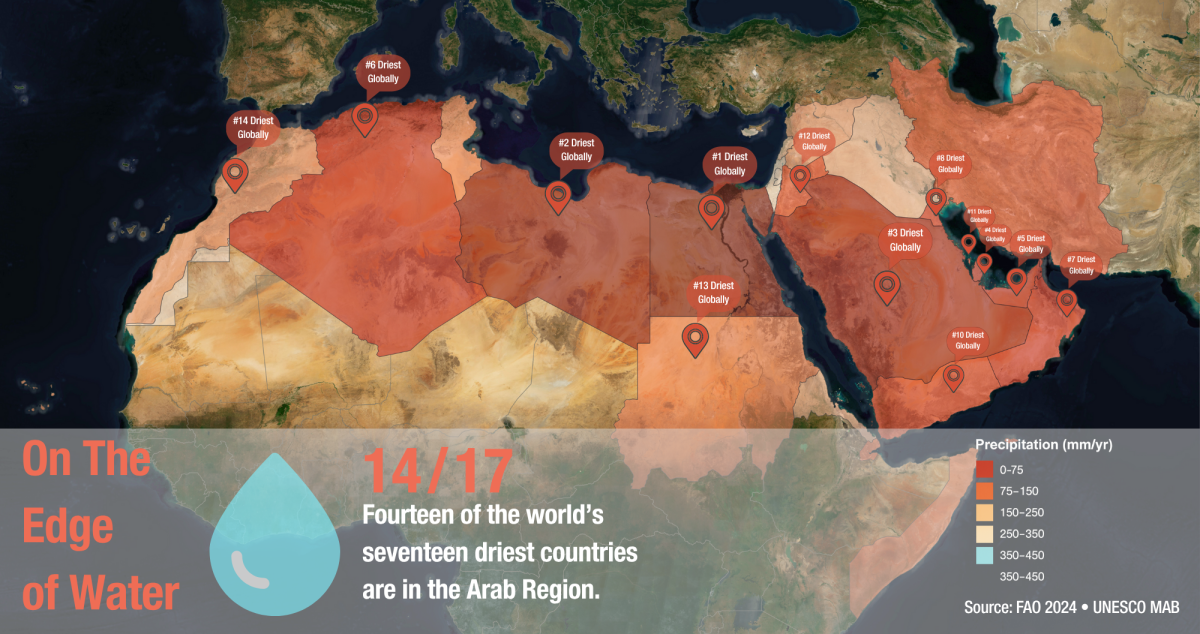
14 of the world's 17 most water-stressed countries are in the Arab Region. This map does not tell a story of weakness — it documents the severity of the challenge that produced humanity's most sophisticated water knowledge.
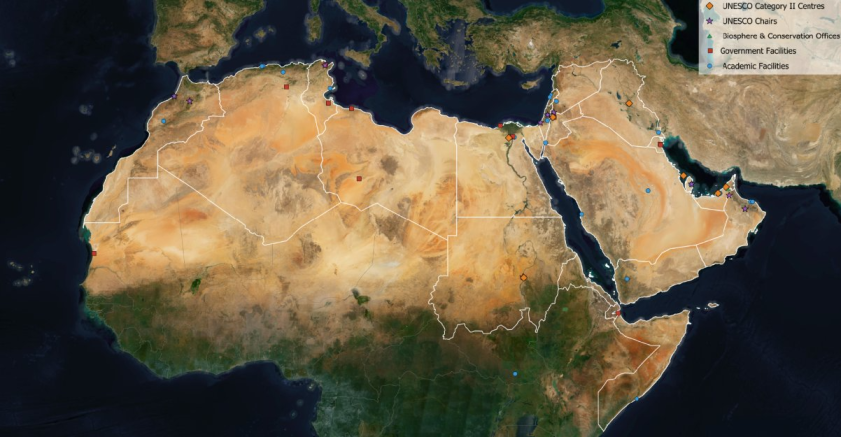
Category II Centres, UNESCO Chairs, Biosphere & Conservation Offices, and Academic Facilities mapped across 22 Arab states.
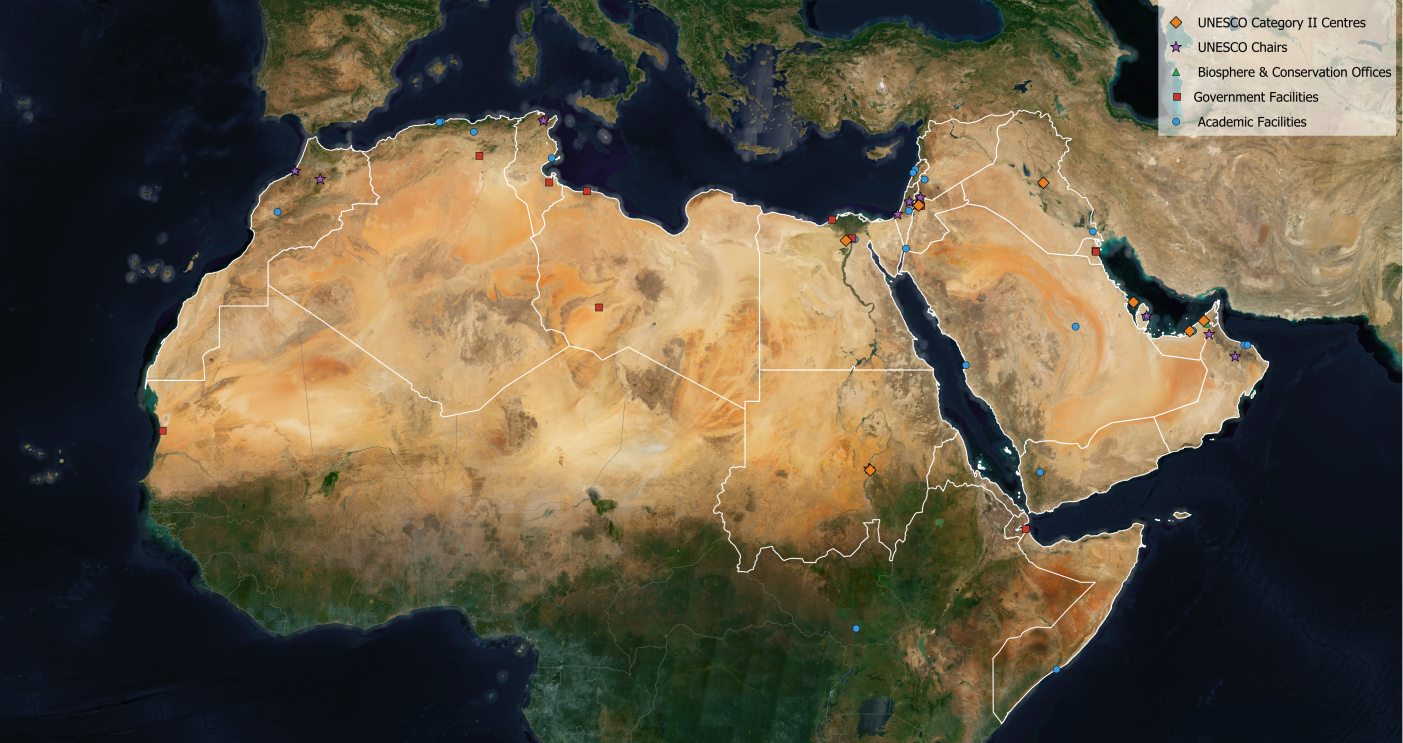
The region hosts world-class research centres in water science, climate modelling, and biodiversity. KAUST leads with 15,200 relevant publications (2015–2025).
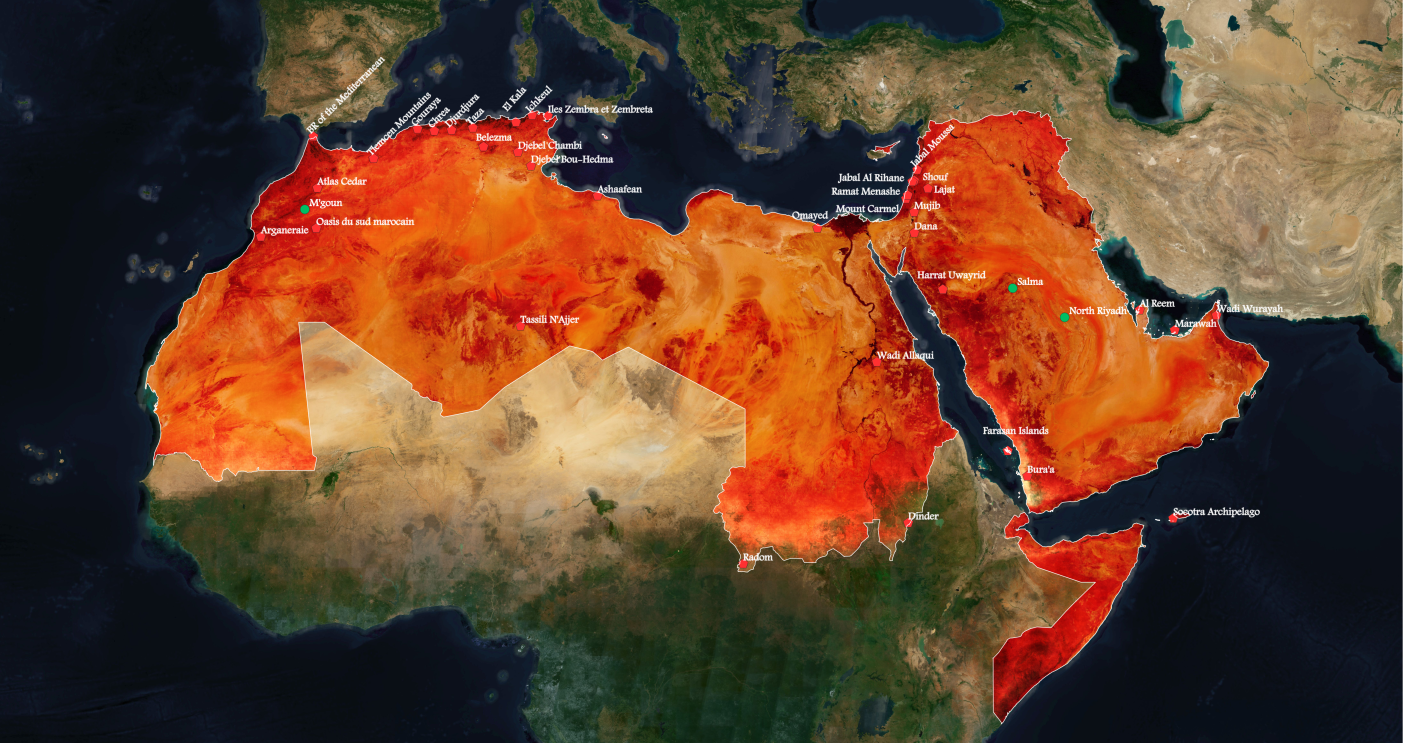
High-resolution satellite base revealing the geographic logic of where conservation infrastructure and natural heritage coincide.
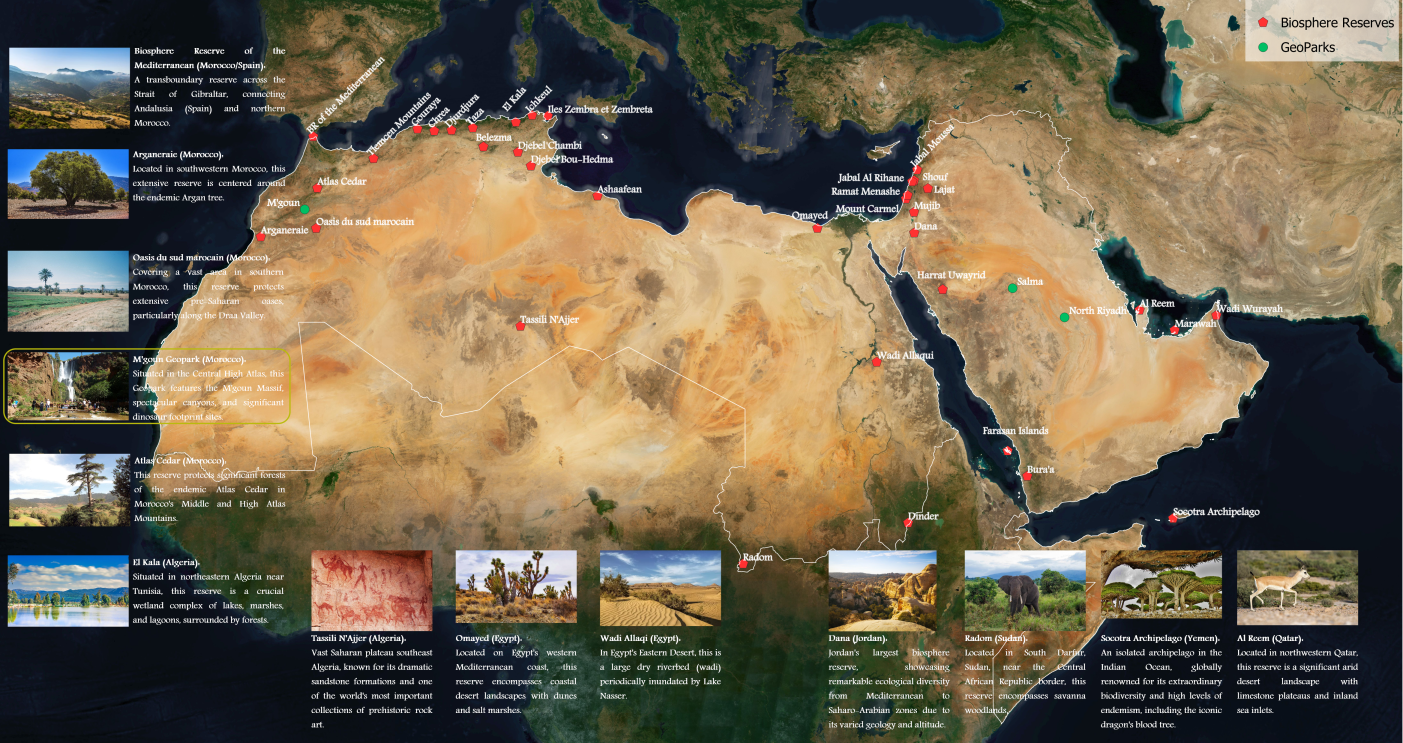
Every UNESCO Biosphere Reserve and Global Geopark in the Arab region — from Morocco's cedar forests to the Red Sea coral reefs and the dragon blood forests of Socotra.
The UHF bridges 8 universities, the Ministry of Tourism & Antiquities, and Cairo Governorate to develop interdisciplinary conservation strategies for Historic Cairo — a UNESCO World Heritage Site since 1979. Over 85 participants produced 7 technical reports directly informing the Conservation & Management Plan. My role: GIS map production, technical documentation, and programme coordination.
Digital Twin of the Mohamed Ali Mosque using Autodesk Revit and Unreal Engine. Predictive maintenance scheduling and solar energy integration simulations.
Urban agriculture, water-sensitive design, rooftop gardens, and reintroduction of historically relevant plant species through participatory landscape planning.
Immersive heritage trails, creative economy clusters, and a proposed visitor centre in Muhib El-Din Hall. Strategic linking of traditional craft industries with cultural tourism.
Adaptive reuse strategies. Innovative financing mechanisms: microfinance schemes, heritage bonds, and eco-transport solutions. Khayer Bek dark tourism VR.
Meticulous documentation of 25+ monuments in the Mamluk Cemetery using a quantitative risk-based prioritization model assigning urgency scores.
Comprehensive climate hazard mapping. Groundwater management protocols, early-warning systems for flooding and subsidence, social well-being indicators embedded alongside monument protection targets.
Crafts, storytelling, and Mawlid practices comprehensively mapped and georeferenced. Community Management Plan proposes repurposing Sabil-Kuttabs as cultural hubs.
Each map was produced in support of the Conservation and Management Plan for Historic Cairo.
Case Studies — Historic Cairo
PDF · Overview MapCore & Buffer Zones 2008
PDF · Boundary MapTheme 1 — Zero-Energy Citadel
PDF · Thematic MapTheme 2 — Green Infrastructure
PDF · Thematic MapTheme 3 — Cultural Economy (A)
PDF · Thematic MapTheme 3 — Cultural Economy (B)
PDF · Thematic MapTheme 4 — Urban Finance
PDF · Thematic MapTheme 5 — Documentation
PDF · Thematic MapTheme 6 — Climate Hazards
PDF · Thematic MapTheme 7 — Living Heritage
PDF · Thematic MapEnvironmental Consultant · Water Resource Specialist · Cairo, Egypt